Categories
Latest Posts

Economic Concepts Everyone Needs to Know

Economics is the study of how people make choices under scarcity. It affects many aspects of our lives, such as how we work, spend, save, invest, and trade. Understanding some basic economic concepts can help us make better decisions and improve our well-being.

Here are five economic concepts that everyone needs to know:

1. Opportunity Cost

Opportunity cost is the value of the next best alternative that is forgone as a result of making a decision. For example, if you decide to watch a movie instead of studying, the opportunity cost is the grade that you could have earned if you had studied.

Opportunity cost helps us evaluate the trade-offs and costs of our choices. By comparing the benefits and costs of different options, we can make more rational and efficient decisions.

2. Supply and Demand

They are the forces that determine the price and quantity of goods and services in a market. Supply is the amount of a product that producers are willing and able to sell at a given price. Demand is the amount of a product that consumers are willing and able to buy at a given price.

Supply and demand interact to create an equilibrium price and quantity, where the quantity supplied equals the quantity demanded. When there is a change in supply or demand, the equilibrium price and quantity will change accordingly.

For example, if there is an increase in demand for a product, the demand curve will shift to the right, resulting in a higher equilibrium price and quantity. This will incentivize producers to increase their supply to meet the higher demand.

3. Inflation and Deflation

Inflation is the general increase in the prices of goods and services over time. Deflation is the general decrease in the prices of goods and services over time. Both inflation and deflation have implications for the purchasing power of money, the cost of living, and the economic growth.

A moderate and stable rate of inflation is considered desirable for a healthy economy. It reflects an increase in the demand for goods and services and encourages investment and consumption. However, a high and volatile rate of inflation can erode the value of money, distort the price signals, and reduce the confidence and certainty in the economy.

Deflation, on the other hand, is usually associated with a weak and stagnant economy. It reflects a decrease in the demand for goods and services and discourages investment and consumption. Deflation can also create a downward spiral of falling prices, lower profits, lower wages, and lower output.

4. Gross Domestic Product (GDP)

Gross domestic product (GDP) is the total value of all the final goods and services produced within a country in a given period of time. It is a common measure of the size and performance of an economy.

GDP can be calculated using three approaches: the expenditure approach, the income approach, and the value-added approach. The expenditure approach sums up the total spending on final goods and services in the economy. The income approach sums up the total income earned by the factors of production in the economy. The value-added approach sums up the value added by each sector of the economy.

GDP can be used to compare the economic output and growth of different countries, regions, or periods. However, GDP has some limitations, such as not accounting for the quality of life, the distribution of income, the environmental impact, and the informal and illegal activities.

5. Comparative Advantage

Comparative advantage is the ability of an individual, a firm, or a country to produce a good or service at a lower opportunity cost than another. It is the basis for trade and specialization.

For example, if country A can produce 10 units of wheat or 5 units of rice with the same amount of resources, and country B can produce 8 units of wheat or 4 units of rice with the same amount of resources, then country A has a comparative advantage in producing wheat, and country B has a comparative advantage in producing rice.

By specializing in their comparative advantage and trading with each other, both countries can increase their total output and consumption of both goods.

Final Thoughts

Economic concepts can be observed in everyday life. This is why it could be useful too know some of the most common theories that can help you make better financial decisions. You don’t need to know all of the advanced concepts – even just the basics can vastly improve your knowledge.



Categories
Latest Posts

How do Mutual Funds Work?

Investing in mutual funds is a popular way to diversify your portfolio without having to buy individual stocks or bonds. But how exactly do they work? This article will explain the basics, their benefits, and how they operate.

What are Mutual Funds?

Mutual funds are investment vehicles that pool money from multiple investors to purchase a diversified portfolio of stocks, bonds, or other securities. Each investor owns shares, which represent a portion of the holdings of the fund.

The Benefits of Investing in Mutual Funds

  • Diversification: One of the primary advantages of mutual funds is diversification. By investing in a range of assets, they can help reduce the risk of loss if one investment performs poorly.
  • Professional Management: They are managed by professional fund managers who make investment decisions on behalf of shareholders.
  • Affordability: They also allow investors to participate in a diversified portfolio with a relatively small amount of money.
  • Liquidity: Mutual fund investors can easily redeem their shares at the current net asset value (NAV) on any business day.

How Mutual Funds Operate

As mentioned, investors buy shares in a mutual fund. The money is pooled together to form a substantial capital base. Each mutual fund has a specific investment strategy outlined in its prospectus. This strategy guides the fund manager’s decisions.

The fund manager then uses the pooled money to buy and sell stocks, bonds, or other securities according to the fund’s investment objective. When investments in the fund’s portfolio earn income through dividends or interest, or when securities are sold at a profit, the fund distributes these earnings to shareholders as dividends.

Net Asset Value (NAV)

The NAV is the total value of the fund’s assets minus its liabilities. It is calculated daily and determines the price at which shares can be bought or sold.

Types of Mutual Funds

There are different kinds of mutual funds. Here are some of them:

  • Equity Funds: These funds invest primarily in stocks and aim for growth over time.
  • Fixed-Income Funds: These funds focus on investments that pay a set rate of return, like government bonds.
  • Index Funds: These funds aim to replicate the performance of a specific index, like the S&P 500.
  • Balanced Funds: These funds invest in a mix of equities and fixed-income securities.

Risks and Considerations

While mutual funds offer many benefits, they also come with risks. The value of mutual fund shares can go up and down, and there is no guarantee of returns. Additionally, they charge fees that can affect your investment returns.

Conclusion

Mutual funds are a practical option for investors looking to diversify their investments and benefit from professional management. By understanding how they work, you can make informed decisions about whether they are the right investment choice for you.


Categories
How to & Advice Latest Posts

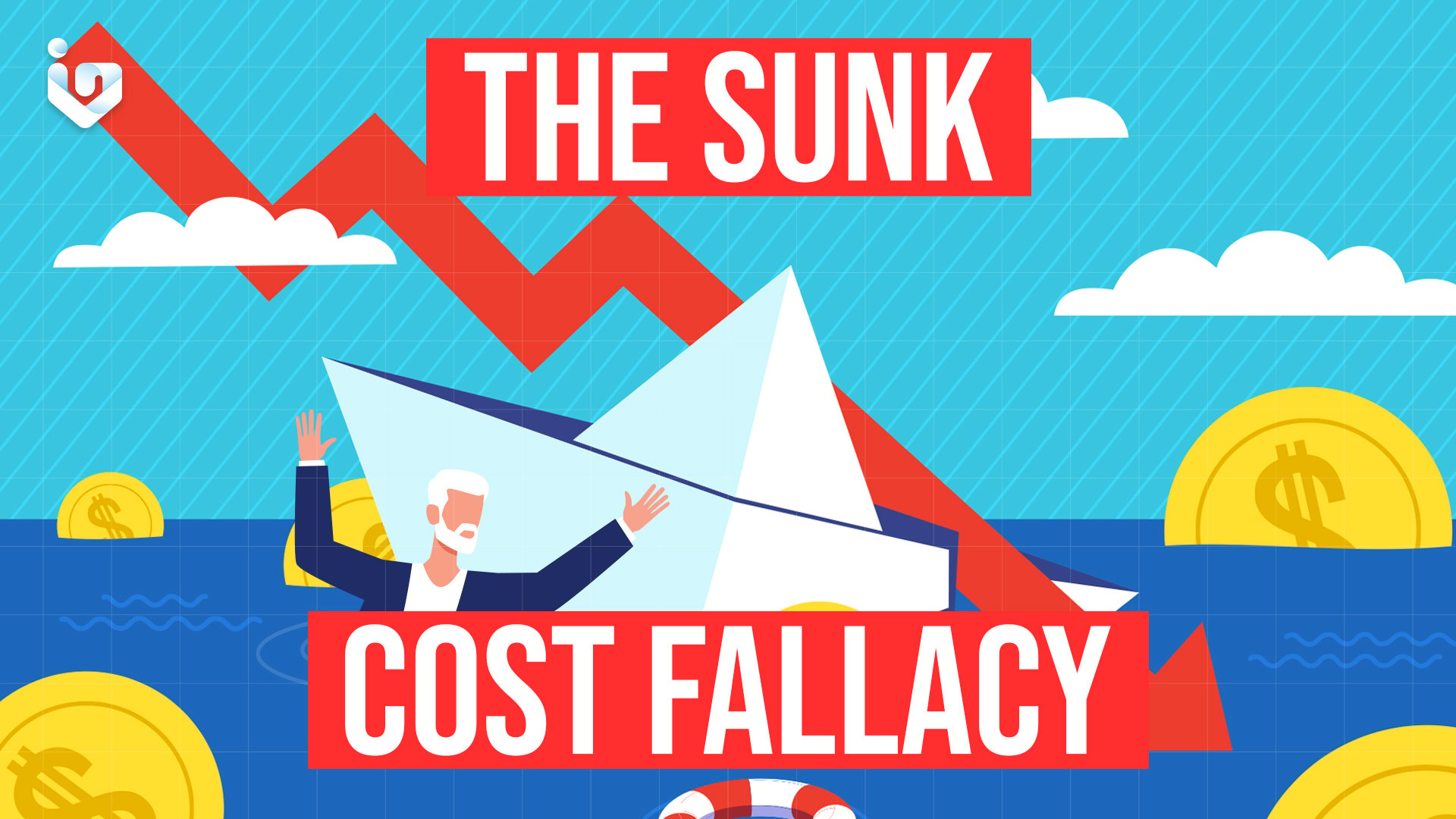
The Sunk Cost Fallacy

The sunk cost fallacy is a cognitive bias that makes you stick to a losing investment or project. This is even when it would be better to cut your losses and move on. The sunk cost fallacy occurs when you consider the money, time, or effort that you have already invested in something as a reason to continue investing, regardless of the future prospects or outcomes.

The sunk cost fallacy can lead to irrational and suboptimal decisions, as it prevents you from evaluating the current situation objectively and rationally. Instead of focusing on the potential costs and benefits of your future actions, you are influenced by the past costs that you cannot recover.

Examples of the Sunk Cost Fallacy

The sunk cost fallacy can affect your investment decisions in various ways. Keeping a stock that is declining in value is a common scenario. Hoping that it will rebound instead of selling does little to help investors. Sometimes, people even tend to double down on that investment for no good reason. 

In general life, it can also be referred to as the “economics of spilled milk.” We tend to worry too much about wasting things we’ve spent resources on. Often, this comes to the point of making suboptimal decisions. 

Why Does the Sunk Cost Fallacy Happen?

The sunk cost fallacy happens because of several psychological factors, such as:

– Loss aversion: Loss aversion is the tendency to prefer avoiding losses over acquiring gains. People feel more pain from losing something than pleasure from gaining something of equal value. Therefore, they are reluctant to accept losses and try to avoid them at all costs.

– Commitment bias: Commitment bias is the tendency to remain consistent with one’s previous actions or beliefs, even when they are contradicted by new evidence or information. People feel the need to justify their past choices and actions, and to maintain a positive self-image and reputation.

– Escalation of commitment: Escalation of commitment is the tendency to increase one’s investment or involvement in a situation, despite negative feedback or outcomes. People feel the pressure to prove themselves right, to avoid wasting their previous investments, or to avoid admitting failure.

How to Overcome the Sunk Cost Fallacy in Investing

Overcoming the sunk cost fallacy in investing can be challenging, but the following strategies can help you:

– Ignore the past costs: The past costs that you have already incurred are irrelevant to your future decisions. They are sunk costs that you cannot recover, no matter what you do. Therefore, you should ignore them and focus on the future costs and benefits of your actions.

– Evaluate the opportunity cost: The opportunity cost is the value of the next best alternative that you give up as a result of your decision. By continuing to invest in a losing situation, you are missing out on other opportunities that could be more profitable or beneficial. Therefore, you should evaluate the opportunity cost of your decision and compare it with the expected value of your current investment.

– Learn from your mistakes: The sunk cost fallacy can also be a learning opportunity, if you are willing to admit your mistakes and learn from them. Instead of being defensive or stubborn, you should be open-minded and flexible. You should analyze your decision-making process, identify the sources of error or bias, and correct them for the future.

In Life and in Trading

Always make sure to have an objective view of the situation. Try to assess the costs and benefits of each decision. Just because you’ve already invested time or money in something, doesn’t mean you need to continue to do so.


Categories
Latest Posts

What are Altcoins

Altcoins (alternative coins) are cryptocurrencies that are not Bitcoin (BTC). They are called altcoins because they offer alternatives to Bitcoin and traditional fiat money. They were created to improve upon the perceived limitations of Bitcoin or to provide new or additional capabilities or purposes. There are thousands of altcoins on the market, each with its own features, advantages, and challenges.

Types of Altcoins

Altcoins can be classified into several types based on their design, function, or origin. Some of the common types are:

Forks

Forks happen when altcoins are derived from the codebase of another cryptocurrency, usually Bitcoin or Ethereum. These can occur when a group of developers disagree with the original project and decide to create a new version with different rules or features. For example, Bitcoin Cash (BCH) and Bitcoin SV (BSV) are forks of Bitcoin. They aim to increase the block size and transaction capacity of the network. Ethereum Classic (ETC) is a fork of Ethereum that preserves the original blockchain after a controversial hard fork in 2016.

Tokens

Tokens are altcoins that are built on top of another blockchain platform, such as Ethereum, Binance Smart Chain, or Solana. They use the existing infrastructure and security of the underlying platform and do not have their own independent blockchain. They can also represent various assets, such as utility tokens, security tokens, non-fungible tokens (NFTs), or stablecoins. For example, Tether (USDT) and USD Coin (USDC) are tokens that are pegged to the US dollar. The goal of these are to provide stability and liquidity in the crypto market. CryptoKitties and Axie Infinity are tokens that are used in popular blockchain games.

Native coins

Native coins are altcoins that have their own original blockchain and do not rely on any other platform. They usually have their own unique features, consensus mechanisms, or use cases that distinguish them from other cryptocurrencies. For example, Monero (XMR) and Zcash (ZEC) are native coins that focus on privacy and anonymity, while Cardano (ADA) and Polkadot (DOT) are native coins that aim to create interoperable and scalable blockchain ecosystems.

Pros and Cons of Altcoins

Altcoins offer various benefits and drawbacks compared to Bitcoin and fiat money. Some of the pros and cons are:

Pros

  – Innovation: Altcoins enable innovation and experimentation in the crypto space, as they introduce new technologies, solutions, or applications that can enhance the functionality, efficiency, or security of the blockchain. They can also cater to specific needs or preferences of different users, communities, or industries, such as gaming, DeFi, or social media.

  – Diversity: Altcoins provide diversity and choice in the crypto market, as they offer different features, risks, and rewards for investors and traders. They can also diversify the portfolio and hedge against the volatility or dominance of Bitcoin or fiat money.

  – Accessibility: Altcoins are generally more accessible and affordable than Bitcoin or fiat money, as they have lower entry barriers, fees, or regulations. They can also reach more people and regions that are underserved or excluded by the traditional financial system, such as the unbanked, the underbanked, or the developing countries.

Cons

  – Volatility: Altcoins are more volatile and risky than Bitcoin or fiat money, as they are subject to high price fluctuations, market manipulation, or speculation. They can also lose value or become obsolete due to competition, regulation, or innovation.

  – Security: Altcoins are less secure and reliable than Bitcoin or fiat money, as they are more vulnerable to hacking, fraud, or theft. They can also suffer from technical issues, bugs, or errors that can compromise the functionality or integrity of the blockchain or the tokens.

  – Complexity: Altcoins are more complex and confusing than Bitcoin or fiat money, as they require more knowledge, research, or understanding to use, store, or trade. Altcoins can also have different standards, protocols, or interfaces that can create compatibility or interoperability challenges.

Future of Altcoins

The future of altcoins is uncertain and unpredictable, as it depends on various factors, such as technology, regulation, adoption, or innovation. However, what we are sure of is that they will continue to coexist with Bitcoin and fiat money. This is because they complement/supplement each other for different use cases. Given that they offer superior features compared to Bitcoin, it’s also possible for them to eventually surpass it. 


Categories
Latest Posts

OFFICIAL: Singlife and Investa Announce Transformative Partnership for Comprehensive Financial Solutions

[Manila, Philippines] – December 12, 2023

In a groundbreaking move to revolutionize the financial landscape, Singlife Philippines and Investa are thrilled to announce their strategic partnership, combining Singlife’s cutting-edge insurance solutions with Investa’s leading social-financial platform. This collaboration is poised to redefine how Filipinos manage their financial needs, providing a seamless and holistic experience.

Complementary Partnership: Ensuring Protection for Investors

Investa’s commitment to empowering individuals to grow their wealth aligns seamlessly with Singlife’s mission of providing financial protection and peace of mind. Investa makes investing a viable option for all, emphasizing accessibility and affordability by offering investment opportunities for as low as PHP 50.

Meanwhile, Singlife’s suite of products perfectly complements Investa’s stock fund offerings. The partnership aims to provide Investa customers with diverse life insurance products for emergencies, income loss, medical needs, and life goals, all of which will be made available on Investa’s website and other platforms.

Major Benefits of the Partnership:

  • Convenience & Accessibility: Users can effortlessly explore Singlife’s insurance products alongside their investment portfolios, streamlining their financial journey in one integrated space.
  • Affordable Solutions: Aligned with Investa’s goal of making investing accessible, Singlife Philippines offers insurance packages at competitive rates, ensuring financial security is within reach for all.
  • Educational Resources: Both brands share a commitment to building financial literacy. Investa will integrate educational content on Singlife’s products, promoting informed and responsible decision-making among its user base.

Empowering Filipinos Toward a Secure Financial Future

Starting December 15, 2023, Investagrams users can seamlessly access Singlife’s suite of insurance products directly on the platform’s website and mobile application. This transformative integration aims to empower Filipinos towards a secure, reliable, and accessible financial future.

Sherie Ng, Singlife Philippines’ Co-Founder and Executive Director, shares her excitement: “This partnership marks a significant milestone in providing Filipinos with a comprehensive financial ecosystem. By combining Singlife’s insurance solutions with Investa’s robust financial tools, we collectively offer users a one-stop-shop for their financial needs, from investment to financial protection.”

For more information about the Singlife and Investa partnership, please visit Investagrams’ website or explore Singlife offers here.

About Singlife Philippines Inc.: Singlife Philippines is the first and only purely digital life insurer in the country, offering innovative and accessible financial solutions.

About Investa Inc.: Investa is a leading social-financial platform in the Philippines, dedicated to enabling individuals to start their investing journey with the right tools, education, and technology.

Contact Information:

Salie Acupan
salie@singlife.com
+63 917 705 8890

Categories
Latest Posts

The VIX: a Measure of Expected Market Volatility

Volatility is a term that describes how much the prices of financial assets fluctuate over time. It is an important concept for investors and traders. This is because it reflects the level of risk and uncertainty in the markets. High volatility means that the prices can change significantly and unpredictably in a short period of time. Low volatility means that the prices are more stable and consistent. One of the most widely used indicators of volatility is the CBOE Volatility Index, or VIX.

Also known as the “fear index”. The VIX measures the market’s expectation of volatility over the next 30 days, based on the prices of options on the S&P 500 index, which is the benchmark for the US stock market. It is calculated and updated in real time by the CBOE and is expressed as an annualized percentage.

The Makings of the VIX

The VIX is derived from the prices of both call and put options on the S&P 500. A call option gives the buyer the right, but not the obligation, to buy the underlying asset at a specified price (the strike price) before a certain date (the expiration date). A put option gives the buyer the right, but not the obligation, to sell the underlying asset at the strike price before the expiration date. The prices of these options reflect the market’s perception of the probability and magnitude of the future price movements of the S&P 500.

The VIX is calculated using a complex formula. It takes into account the prices of various options with different strike prices and expiration dates. The formula essentially aggregates the implied volatilities of these options, which are the volatilities that are implied by the option prices, rather than the historical volatilities that are based on the past price movements. The implied volatilities are weighted and averaged to produce a single number that represents the market’s expected volatility.

The VIX as a Measure of Fear

Generally, a high VIX indicates a high level of fear or pessimism among investors. It means they expect large price swings and are willing to pay more for options to hedge or speculate on the market movements. Conversely, a low mar indicates a low level of fear or optimism among investors. It signifies that they expect small price changes and are less interested in options. The VIX is inversely correlated with the S&P 500. Usually, when the VIX goes up, the S&P 500 goes down, and vice versa.

The VIX is not only a measure of volatility, but also a tradable instrument. Investors and traders can use various products, such as futures and exchange-traded funds (ETFs). These let you gain exposure to the VIX or to hedge against volatility risk. For example, one can buy VIX futures or options to profit from an increase in volatility. Alternatively, one can buy or sell ETFs that track the performance of the VIX or its inverse, such as the iPath S&P 500 VIX Short-Term Futures ETN (VXX) or the ProShares Short VIX Short-Term Futures ETF (SVXY).

To Sum it Up

The VIX is a useful tool for investors and traders who want to measure and trade volatility in the market. However, it is not a perfect indicator, as it is based on market expectations and not on actual outcomes. Therefore, it is important to use the VIX in conjunction with other tools and indicators, such as technical analysis, fundamental analysis, and economic data, to get a more comprehensive and accurate picture of the market conditions and trends. 

You can treat it as another lens to use while looking at the markets.


Categories
Latest Posts

Stocks in December

December is often a good month for stock investors, as many markets tend to rally during this period. According to historical data, the S&P 500 has gained an average of 1.3% during December, the highest average of any month and more than double the 0.7% gain of all months. Even in the Philippines, stocks in December tend to do better vs. previous months.

But what are the reasons behind this seasonal phenomenon?

Why Does This Happen?

There could be many reasons why stocks in December typically do better.

  • Window dressing: This is a practice where fund managers buy stocks that have performed well during the year to improve the appearance of their portfolios before the year-end. This creates a positive feedback loop, as more buying pushes the prices of these stocks higher, attracting more buyers.
  • Tax-loss harvesting: A strategy where investors sell stocks that have declined in value during the year to offset their capital gains and reduce their tax liability. This creates a negative feedback loop, as more selling pushes the prices of these stocks lower, attracting more sellers. However, some of these investors may buy back the same stocks in December, after the 30-day wash-sale rule expires, to restore their positions. This creates a rebound effect, as more buying pushes the prices of these stocks higher, attracting more buyers.
  • Holiday spending: This is a factor that affects consumer discretionary stocks, such as retailers, restaurants, and entertainment companies, that benefit from the increased spending during the holiday season. Some believe that retailers tend to invest more during the holiday season.
  • Santa Claus rally: The term refers to the tendency of stocks to rise during the last five trading days of December and the first two trading days of January. This phenomenon is attributed to various factors, such as the optimism and cheerfulness of investors during the holiday season, the anticipation of the January effect, and the low trading volume that makes the market more susceptible to price movements. In effect, stocks in December could be benefitting from the positive feedback loop created.

Should You Buy Stocks in December?

Of course, these factors are not guaranteed to work every year. Factors like the economic outlook, the monetary policy, and geopolitical events can all affect stocks in December. Therefore, investors should not rely solely on seasonality. Treat it as a tailwind, and use other tools and indicators to better time your investments.

In summary, stocks in December tend to perform well, as there are several seasonal factors that create a positive momentum for the market. However, investors should also be aware of the risks and uncertainties that affect the markets.


Subscribe to our Newsletter

Join our mailing list for investing tips and stock market advice
to help you reach your first million.

You have Successfully Subscribed!