
Categories
Latest Posts

How Seasonalities Influence Stocks

Demystifying the world of stock market investments is a challenging, yet rewarding endeavor. One concept that often leaves investors scratching their heads is the phenomenon of stock market seasonality. This term refers to the predictable patterns or trends that financial markets tend to exhibit at certain times of the year. These patterns can be tied to specific calendar months, weeks, or even days, and are influenced by a variety of factors including economic cycles, consumer demand, and investor psychology.

The Rhythm of the Market

Understanding the rhythm of the market is crucial for an effective investing strategy. Some sectors are distinctly seasonal, like retail, tourism, and agriculture. For instance, retail stocks often see a positive trend during the holiday season, propelled by the surge in consumer spending. In the same vein, tourism-related stocks tend to experience a boost during the summer vacation months. Recognizing these seasonal trends can significantly enhance your ability to identify potential investment opportunities and time your entries and exits in the market.

Weathering the Seasons

Seasonality isn’t just about holidays and vacations. Even the weather can have a noticeable impact on certain market sectors. Energy stocks, for example, might fluctuate based on the changing demand for heating or cooling. Agriculture stocks too can see shifts in value depending on planting and harvest seasons, which in turn affect crop yields. Recognizing these patterns can help investors make smarter, data-driven investment decisions.

Investor Behavior and Seasonality

Investor behavior itself is often swayed by seasonal factors. Certain calendar-based trading anomalies, like the ‘January effect’ and the ‘Santa Claus rally,’ can create buying or selling pressure at specific times of the year, leading to price movements in the stock market. Understanding these phenomena and how they influence investor behavior can provide you with an edge in anticipating market trends.

While seasonality can be a powerful tool in the investor’s toolbox, it’s important to remember that it should be used in conjunction with other fundamental and technical analysis methods. Always consider the broader market conditions and use data-driven insights to inform your strategies.

In the world of investing, knowledge is power. By understanding the role of seasonality, you can harness its potential to make better investment decisions. Remember, every season brings a new opportunity.


Categories
Latest Posts

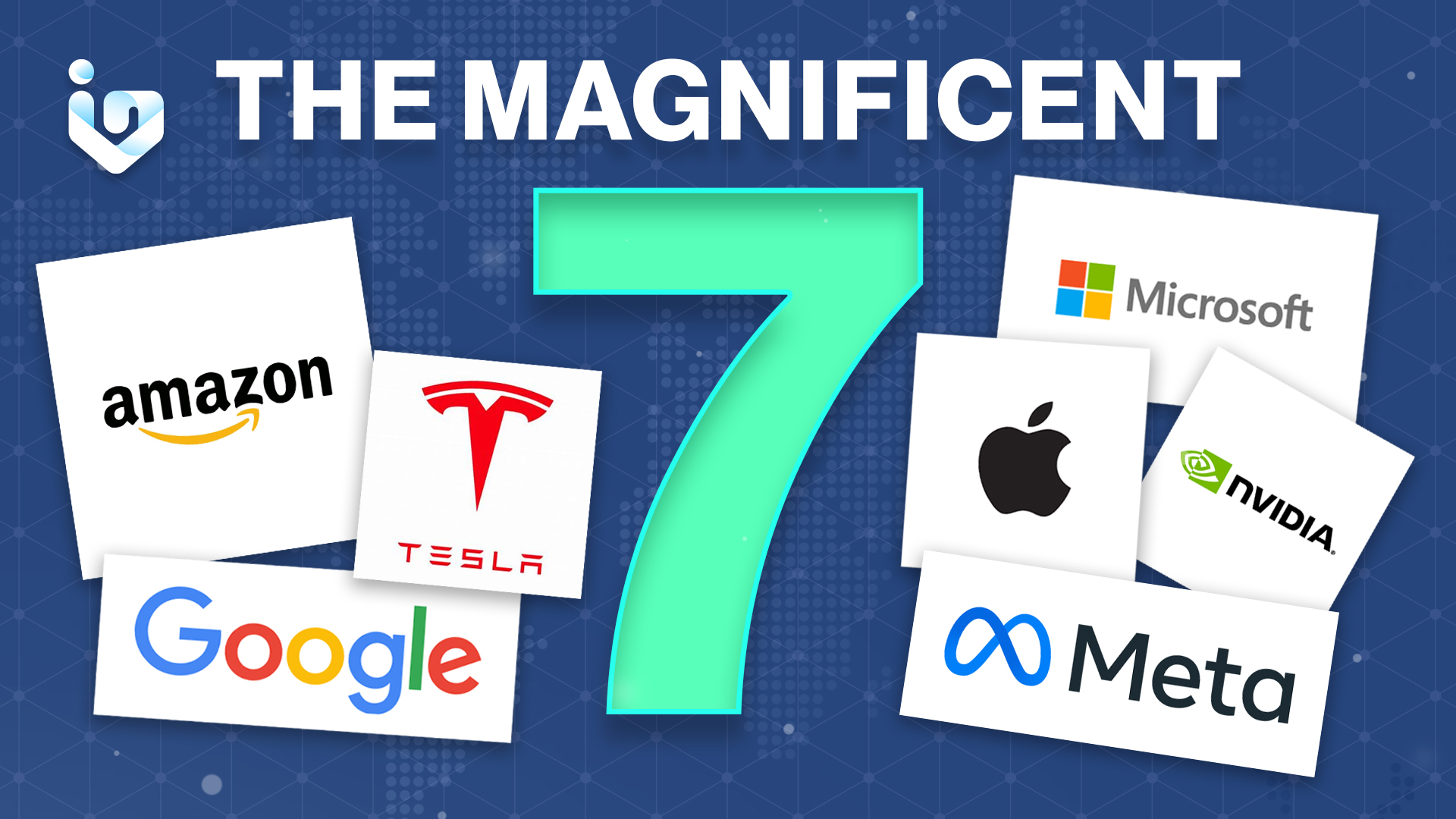
The Magnificent 7

The “Magnificent 7” refers to a select group of high-performing tech giants that have reshaped the investment landscape. These companies are leaders in technological innovation, market dominance, and global reach. Let’s dive into each of them:

1. Apple (AAPL)

Overview: Apple needs no introduction. It revolutionized consumer electronics with iconic products like the iPhone, iPad, and Mac. Its ecosystem includes services like Apple Music and the App Store.

Innovation: Apple continues to push boundaries, investing in augmented reality (AR), wearables, and health tech.

2. Microsoft (MSFT)

Overview: Microsoft dominates the software industry. Its Windows operating system, Azure cloud services, and Office suite are ubiquitous.

AI and Innovation: Microsoft is a leader in AI research and development, including its collaboration with OpenAI.

Recent Move: Microsoft integrated ChatGPT (created by OpenAI) into its Bing search engine.

3. Alphabet (GOOG and GOOGL)

Overview: Alphabet (formerly Google) is synonymous with search. It also owns YouTube, Android, and cloud services.

AI and Data: Google’s AI capabilities drive its products, from search algorithms to self-driving cars.

Market Dominance: Google’s advertising business remains a cash cow.

4. Amazon (AMZN)

Overview: Amazon started as an online bookstore but evolved into a global e-commerce giant.

Cloud Services: Amazon Web Services (AWS) revolutionized cloud computing.

Entertainment: Amazon Prime Video and Twitch contribute to its ecosystem.

Returns: Impressive gains for long-term investors.

5. NVIDIA (NVDA)

Overview: NVIDIA specializes in graphics processing units (GPUs) and AI hardware.

AI Leadership: GPUs power AI training and inference.

Gaming: NVIDIA’s gaming GPUs are sought after.

6. Tesla (TSLA)

Overview: Tesla disrupted the automotive industry with electric vehicles (EVs).

Tech-Driven: Tesla’s Autopilot and Full Self-Driving features rely on AI.

Energy: Tesla’s solar and energy storage solutions are innovative.

7. Meta Platforms (META)

Overview: Formerly Facebook, Meta is a social media giant.

Metaverse Vision: Meta aims to build the metaverse – a virtual shared space.

AI and VR: Meta invests in AI, virtual reality (VR), and AR.

Conclusion

The Magnificent 7 stocks are at the forefront of technological progress. As an investor, understanding their impact and growth potential is crucial. Whether you’re a seasoned trader or a beginner, keep an eye on these remarkable companies shaping our digital future.


Categories
Latest Posts

How AI Is Impacting Investing Trends

Artificial Intelligence (AI) has revolutionized various industries, and investing is no exception. As technology advances, AI is playing an increasingly significant role in shaping investment strategies, risk management, and decision-making. In this article, we’ll delve into how AI is transforming the investment landscape.

The Rise of AI in Investing

Data-Driven Insights

AI leverages vast amounts of data to extract valuable insights. By analyzing historical market data, news articles, and financial reports, AI algorithms identify patterns, correlations, and anomalies that human analysts might miss. This data-driven approach enhances investment decision-making.

Sentiment Analysis

One powerful application of AI in investing is sentiment analysis. Natural language processing (NLP) algorithms analyze news articles, social media posts, and earnings calls to gauge market sentiment. Positive or negative sentiment can influence stock prices, and AI helps investors stay ahead of market sentiment shifts.

AI-Driven Investment Strategies

Quantitative Models

Quantitative hedge funds and asset managers rely heavily on AI-driven models. These models process vast datasets, identify statistical patterns, and execute trades automatically. Machine learning algorithms adapt to changing market conditions, optimizing portfolio performance.

Algorithmic Trading

Algorithmic trading, powered by AI, executes trades at lightning speed based on predefined rules. High-frequency trading (HFT) algorithms capitalize on market inefficiencies, exploiting price discrepancies within milliseconds. AI algorithms continuously learn and adapt to market dynamics.

Risk Management and Portfolio Optimization

Predictive Analytics

AI models predict market movements, volatility, and potential risks. By analyzing historical data, they estimate the likelihood of specific events (such as market crashes or economic downturns). Investors use these insights to adjust their portfolios and manage risk effectively.

Portfolio Diversification

AI helps optimize portfolio diversification. It considers correlations between assets, risk factors, and historical performance. By suggesting diversified asset allocations, AI minimizes risk while maximizing returns.

Challenges and Ethical Considerations

Bias and Fairness

AI models can inherit biases from training data. It’s crucial to address bias to ensure fair and equitable investment decisions. Regular audits and transparency are essential.

Interpretability

AI models often lack interpretability. Investors need to understand why a model makes specific recommendations. Efforts are underway to create more interpretable AI systems.

Conclusion

As AI continues to evolve, its impact on investing will only grow. Investors who embrace AI-driven insights and adapt to technological advancements will stay ahead in an ever-changing financial landscape. 


Categories
Latest Posts

The Economics of Trade and Globalization

Trade and globalization are pivotal forces shaping our interconnected world. They influence economies, cultures, and societies across borders. In this article, we’ll explore the dynamics of international trade, its historical context, and its impact on economic development.

The Growth of Trade

Remarkable Expansion

Over the last two centuries, international trade has experienced extraordinary growth. Consider this: today’s exports are over 40 times larger than they were in 19131. This exponential increase has outpaced economic growth, emphasizing the significance of trade in our global economy.

Trade Relative to GDP

To gain further perspective, let’s examine trade relative to total economic output. Up to 1870, worldwide exports accounted for less than 10% of global GDP. Today, the value of exported goods constitutes around 25% of the global economy1. This demonstrates how trade has become an integral part of our economic fabric.

Waves of Globalization

First Wave: 19th Century

The first “wave of globalization” began in the 19th century. Advances in transportation, communication, and industrialization facilitated the exchange of goods across borders. Nations became more interconnected economically.

Second Wave: Post-World War II

The second wave emerged after World War II. Multilateral institutions like the World Trade Organization (WTO) promoted free trade, leading to increased global economic integration. Supply chains spanned continents, and multinational corporations flourished.

Benefits

Resource Access: Trade allows countries to obtain resources they lack domestically. Whether it’s raw materials, technology, or expertise, trade bridges gaps.

Economic Growth: Open markets foster innovation, competition, and efficiency, driving economic prosperity.

Cultural Exchange: Trade encourages cultural exchange, enriching societies through shared ideas and practices.

Challenges

Inequality: While trade benefits many, it can exacerbate income inequality within and between nations.

Dependency: Overreliance on specific trading partners can pose risks during geopolitical tensions or supply disruptions.

Environmental Impact: Trade affects the environment through transportation emissions and resource extraction.

Conclusion

Understanding trade and globalization is essential for informed decision-making. As our world continues to evolve, these forces will shape our collective future.


Categories
Latest Posts

How Important is Real-Estate in an Investment Portfolio?

Investing in real estate is a cornerstone of wealth building. It’s a key component in many successful investment portfolios. With most of our current generation mainly focusing on stocks, cryptocurrencies and the like, let’s take a step back and look at why real-estate should also be a part of our investment portfolio.

Diversification and Risk Mitigation

Real estate acts as a buffer against stock market volatility. When stocks experience downturns, real estate investments often remain stable. This diversification helps reduce overall portfolio risk. Additionally, real estate returns are not perfectly correlated with stock returns, providing an extra layer of protection.

Inflation Hedge

Real estate tends to appreciate over time, keeping pace with inflation. As the cost of living rises, property values increase, preserving your purchasing power. Income from long-term lease contracts can also be a significant component of real estate returns, especially when investors seek yield.

Steady Income

Rental income from real estate properties provides a consistent cash flow. Unlike stocks, which may not pay dividends regularly, real estate generates rental income month after month. This income stream can be especially valuable during economic downturns.

Tangible Asset

Real estate is a tangible asset—you can see and touch it. Unlike stocks or bonds, which exist only in digital form, real estate provides a sense of security. Owning physical properties gives investors a feeling of control and stability.

Potential for Appreciation

Historically, real estate has appreciated over the long term. While short-term fluctuations occur, well-chosen properties tend to increase in value. Whether it’s residential, commercial, or industrial real estate, the potential for appreciation remains attractive.

Conclusion

In summary, real estate should be a part of your investment portfolio. Allocate a portion—typically 5% to 10%—to benefit from diversification, steady income, and potential appreciation. Remember that each investor’s situation is unique, so consult with a financial advisor to tailor your real estate allocation to your specific goals and risk tolerance. 


Categories
Latest Posts

Dividend Investing Tips

Dividend investing is a powerful strategy that allows traders to generate passive income while participating in the stock market. 

Dividends are essentially the share of investors in the company’s earnings. By focusing on companies that consistently pay dividends, investors can build wealth over time. Let’s explore the different tips that can help you maximize dividend gains.

1.  Seek High-Yield Dividend Stocks

Seek out companies with a history of high dividend yields. These stocks offer attractive payouts relative to their share price. Look for stable companies in sectors like utilities, real estate, and consumer staples.

However, be cautious of extremely high yields. Sometimes, they indicate underlying issues with the company. Look beyond the yield and assess the company’s financial health. Analyze a company’s financials, payout ratio, and dividend history. Ensure that the company can sustain its dividend payments.

2. Look for Dividend Aristocrats

Dividend aristocrats are companies that have increased their dividends for at least 25 consecutive years. These firms demonstrate financial stability and commitment to shareholders. Popular examples include Coca-Cola co., 3M co., and others.

While companies here in the Philippines don’t always meet the 25 consecutive years criteria, it should pay to still look for companies that have a solid track record of consistent dividend growth. These stocks may not have the highest initial yield, but their ability to raise dividends over time can lead to substantial returns.

4. Diversify 

Spread your investments across different sectors. As always, diversification will always help you reduce your risks and maximize returns in the long run.

5. Reinvest Dividends

Make sure to take advantage of exponential growth. Reinvesting dividends allows you to buy more shares of a stock that will in return further increase the amount of dividends you gain in the future.

Dividend investing is all about patience. Focus on the long term, reinvest dividends, and let compounding work its magic.

6. Be Wary of Dividend Induced Price Swings

As a trader or investor, it pays to know the schedule of dividend ex-dates. Ex-dates are when companies record who the shareholders are that will be provided dividends. Usually, prices tend to rise heading towards the ex-date and drop afterwards as traders try to just get the dividends from the company. There are different ways to interpret and take advantage of this, so it would help to try and observe what usually unfolds near dividend ex-dates. If you want to find the schedule of dividends for local stocks, you can check them out here: https://www.investagrams.com/Stock/Events/CalendarView 

Conclusion

Dividend investing offers a steady stream of income and the potential for capital appreciation. By following these tips and implementing sound strategies, you can build a robust dividend portfolio that serves you well over time.

Remember, successful dividend investing requires research, discipline, and a commitment to your financial goals. Start today, and watch your dividends grow!


Categories
Latest Posts

General Economics: M1 and M2

In the realm of general economics, the terms M1 and M2 frequently surface, especially when discussing monetary policy, banking, and economic health. These monetary aggregates are pivotal in gauging the money supply within an economy, influencing decisions from policymakers to financial analysts.

M1: The Immediate Money Supply

M1 is the most liquid form of money. It includes physical currency circulating in the public, traveler’s checks, demand deposits, and other checkable deposits. M1 represents money that is readily available for transactions and immediate expenditure. It’s the frontline soldier of the economy, ready at a moment’s notice to engage in commerce and trade.

The velocity of M1 is high, as it changes hands quickly, facilitating day-to-day transactions. Economists monitor M1 closely because it reflects the economy’s active money—the fuel driving the engine of commerce.

M2: The Broader Money Supply

M2 is a broader classification of money. It encompasses all of M1 plus savings deposits, time deposits under $100,000, and non-institutional money market funds. M2 is like a reservoir of funds, not as readily accessible as M1 but still crucial for the economy’s liquidity.

The components of M2 are near money, which means they can be quickly converted into cash or checking deposits. M2 is indicative of the economy’s saving tendencies and its potential to fuel future spending and investment.

The Interplay Between M1 and M2

The relationship between M1 and M2 is dynamic. During periods of economic uncertainty, people might prefer liquidity, hence M1 increases. Conversely, in stable times, individuals may opt for the higher interest rates offered by the components of M2, thus swelling its size.

Central banks, like the Federal Reserve in the United States, use the control of M1 and M2 as a mechanism to steer the economy. By influencing interest rates and banking reserves, they can expand or contract these aggregates, affecting everything from inflation to unemployment.

M1, M2, and Inflation

Inflation is a persistent increase in the general price level of goods and services. M1 and M2 can be leading indicators of inflationary trends. A rapid increase in M1 could signal an overheated economy, leading to inflation. Similarly, a significant expansion of M2 suggests that there is a lot of money waiting on the sidelines, which could enter the active economy and drive up prices.

Conclusion

M1 and M2 are more than just numbers on a balance sheet; they are vital indicators of economic health and activity. Understanding these aggregates helps economists, policymakers, and investors make informed decisions. As the economy evolves, so does the significance of M1 and M2, making them essential components in the study of general economics.


Subscribe to our Newsletter

Join our mailing list for investing tips and stock market advice
to help you reach your first million.

You have Successfully Subscribed!